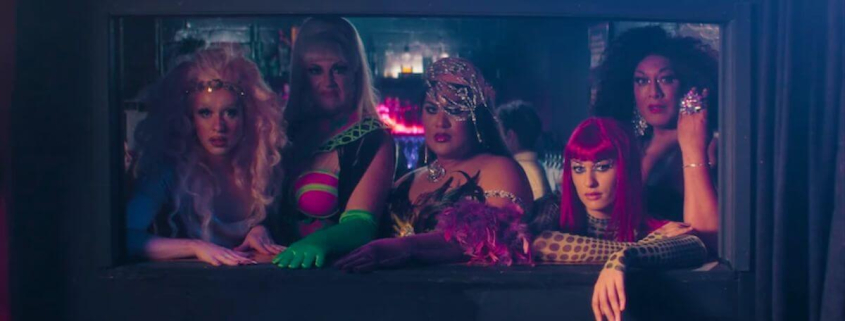
DEGANZ member Ramon Te Wake‘s new series The Boy, The Queen and Everything in Between is out now.

The series, co-directed, co-produced, and written by Ramon, follows Jacob, a young father fresh out of prison and in desperate need of a job. Dire circumstances push him to seek out his estranged father Max, Aotearoa’s most famous drag queen. While the titular boy and queen’s relationship is the show’s focal point, the show also delves into the Karangahape Road club Max runs and the community within and around it.

Ramon shares in an interview with Stuff that the series is a love letter to her community,

K’ Road will always be a source of inspiration for me for anything I do.

With Ramon at the helm, the production also prioritised authentic casting, wanting the queer roles to be “of lived experience.” Ramon has always been and continues to be a massive advocate for authentic representation of queer people on screen.

Celebrate K’ Road and the queer community with Ramon by watching The Boy, The Queen and Everything in Between on TVNZ+.

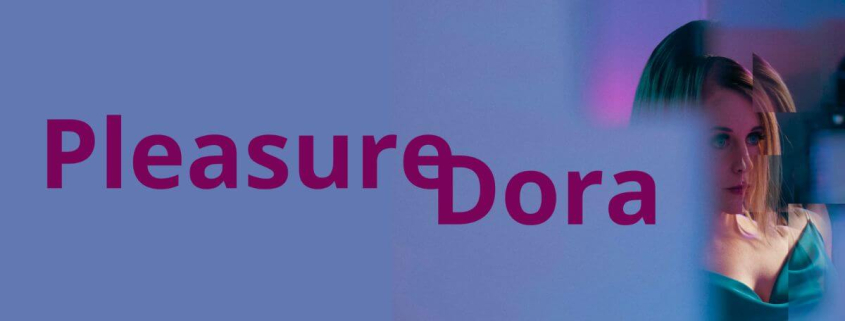
Mark Prebble (DEGANZ) and the PleasureDora team are crowdfunding $10,000 to finish post-production on the short film.

The film questions meaningful connection in the age of AI and machine learning with the titular PleasureDora, a glitchy sex bot at the end of her shelf life. In her final service with lonely customer Colin, both man and robot confront mortality, their desire to reach their full potential, and authentic connection.

So far, the team has shot and edited the short. With this final stretch of funding, they will be able to finish the last stages of post-production to make the film as cinematic as possible. They plan to dedicate the funds to colour grading, visual effects, sound design, and music composition.

They’ll also use the remaining budget to work with Festival Formula to devise a festival strategy and to cover a few festival submission fees.

If you’d like to check out the project and the team’s mahi, you can check out their Boosted campaign here!

View from the Top banner

Greetings from DEGANZ for 2024!

Currently overseas on a personal trip and headed back as I write this. I’ve had a couple of goes at this op-ed but still felt I wasn’t getting the tone right.

As I reflect back on what has passed and what we face in 2024, it’s hard not to be pessimistic.

The global screen industry has undergone seismic shifts and continues to do so. These have long-term impacts for us as a domestic screen industry. Yet, we seem to move so slowly in adapting to those changes here in New Zealand that we are constantly forced to play catch-up. And we’re not catching up.

At the same time, we face a year of economic challenges that’s pushed Arts and Culture off the government agenda—with a government that doesn’t have an Arts and Culture policy.

The Minister of Finance has just announced the cuts expected across all ministries, including a 7.5% cut to the Ministry of Culture and Heritage’s spending. This on top of the belt-tightening that’s underway at the NZ Film Commission now.

NZFC has just released  a draft strategy for review. On the face of it, it seems to have some positives, but like all strategic plans that don’t outline concrete tactical objectives, it is widely open to interpretation. We shall have to wait and see. All the screen orgs are preparing their feedback now, including us.

At a certain level, there is ongoing funding available for domestic production, albeit at budgets that remain low across all genres in film and TV. At the same time in the last two years alone, the cost of living in New Zealand rose 7.4% in the 2021 – 2022 year, and 7.2% this last year.

Most directors and editors rates have moved little in the last 10 – 15 years. Crew rates meanwhile have increased with the introduction of the techos guild’s new rate card. While international productions can afford these rates, domestic productions are finding it difficult, particularly in film. This will worsen when the competition for crew increases. It’s clear that there aren’t going to be increases in funding for our funding bodies, so who’s going to pay? Or do we still expect everybody to do it for the love?

On the positive side, the NZ Screen Production Rebate for domestic TV productions now allows for both the rebate and funding body funding for all genres. But the requirement for a free-to-air broadcast either up front or at some point still significantly hinders our ability to capitalise on global opportunities.

Another positive is that international production shooting in New Zealand is on the up. That is good news, especially as our international rebate at 20 – 25% is no longer directly competitive with many other countries.

It’s also good that SPADA has finally woken up to the need for a levy on streamers. Many other countries already have them in place. The joint effort recently announced by SPADA and other international producer associations to drive streamer levies is encouraging. Read here.

I was always of the belief that with great change comes great opportunity. You only have to look at the Australian screen sector to see that’s true there—even with the lower number of streamer commissions there now, the Aussie industry is buoyant.

For us though more concerned with domestic NZ production, if our funding bodies and we don’t find other sources of revenue for making NZ films and programmes, sooner or later the question has to come: Are we going to continue to make a lot for a little, or are we going to fund things appropriately but at much smaller numbers?

2024 is not going to be easy for NZ’s domestic production sector, but there will undoubtedly be rays of hope amidst the gloom we are facing.


Tui Ruwhiu
Executive Director


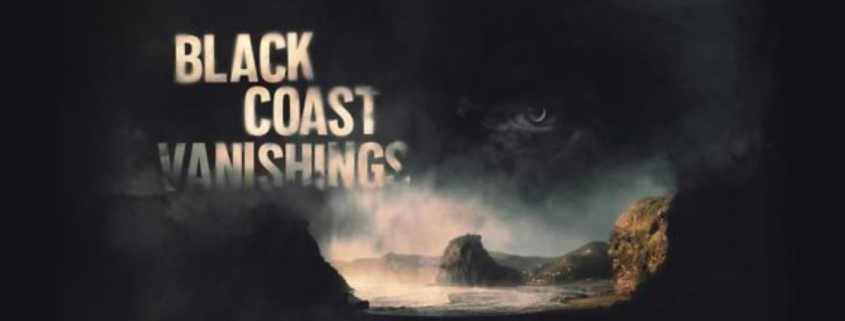
DEGANZ members dive into the mysterious disappearances in Piha with new true-crime docuseries, Black Coast Vanishings. Megan Jones (DEGANZ) co-directed the series with Candida Beveridge, while, board member Margot Francis was one of the editors. Additionally, fellow member Alyx Duncan directed the series’ dramatisations.

The four-part limited series works to uncover if there’s a link between six missing person cases from the small coastal town over the past 30 years. While some of the disappearances were thoroughly investigated at the time, others were not and were deemed caused by the hostile natural environment. Despite the police reports, many locals believe there is something more sinister going on in the community.

The show investigates both the past and present, shedding light on new allegations from several women who survived encounters with threatening men.

Since its release, Black Coast Vanishings has made a strong impression, inciting public pressure for police to reexamine some of the closed cases from the area.

Well done to Megan, Margot, and Alyx on the series’ successful release!

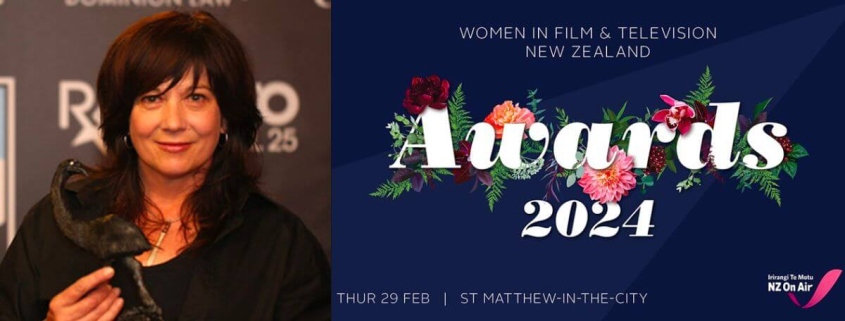
DEGANZ member Cushla Dillon is being recognised for her work as an editor with her nomination for the Wētā FX Creative Technology Award at this year’s Women in Film & Television (WIFT) Awards.

This award recognises outstanding achievement in creativity in post-production in film, TV, or digital media from the past two years.

Cushla shared with DEGANZ about her nomination,

It’s a huge honour to be included in the Wētā Creative Technology Award along with other post-production artists.  Our success is usually contingent on being invisible therefore our work is usually overlooked, so I’m grateful that Wētā has acknowledged us with this award.

The WIFT Awards is a bi-annual event designed to celebrate the achievements of women in the screen industry. The awards night announces the winners, offers unique networking opportunities for those in attendance, and fundraises for WIFT’s ongoing work.

Congratulations, Cushla on the nomination!