
Career Spotlight: Annie Collins ANZSE
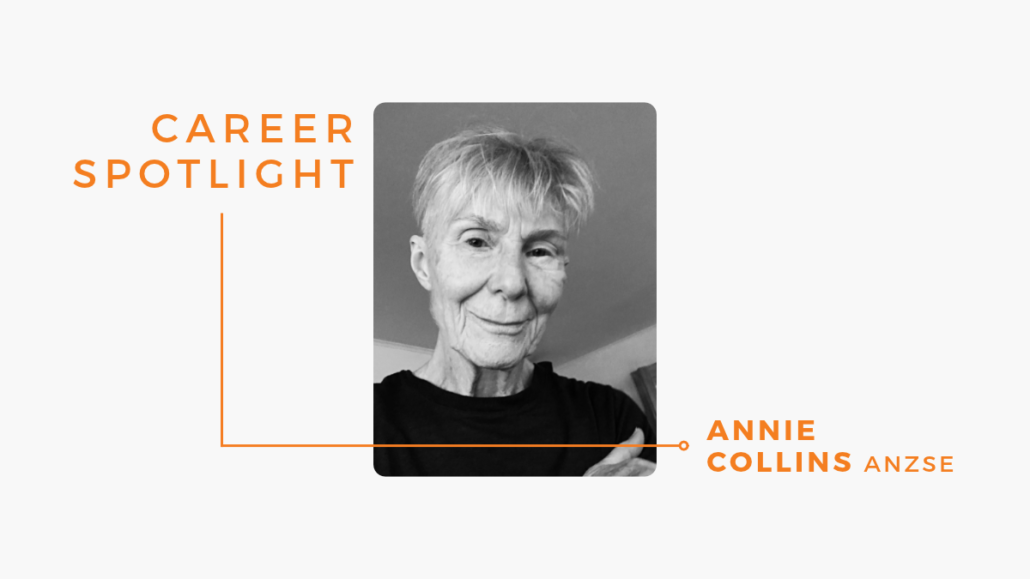
For close to fifty years, Annie Collins ANZSE has helped shape the rhythm, emotional core, and narrative punch of Aotearoa New Zealand screen culture. From political documentaries and independent dramas to blockbusters that captured global attention, Annie is regarded as one of Aotearoa’s most accomplished and respected film editors.
Annie stumbled into the world of editing almost by accident. She studied at the Wellington School of Design, and under the guidance of filmmaker Pat Cox, the industry slowly revealed itself as a natural home for Annie. She began on film as an assistant editor in the late 1970s and worked on sound editing for classic features like Sleeping Dogs (1977) and Goodbye Pork Pie (1980), where she developed a strong technical intuition and a deep respect for the collaborative alchemy of filmmaking.
Throughout the 1980s and the 1990s, Annie cemented her reputation on projects that sparked intense cultural and political debate. She edited Merata Mita’s monumental Springbok tour documentary Patu! (1983) and the corporate exposé The Neglected Miracle (1985) for Barry Barclay. Her documentary work routinely gave voice to powerful narratives over the years — spanning projects like Mana Waka (1990), Barry Barclay: The Camera on the Shore (2010), Gardening with Soul (2013) and Voices of the Land: Ngā Reo o te Whenua (2014).
Through her work with Merata Mita, she became committed to Te Tiriti o Waitangi and indigenous rangatiratanga. Annie co-facilitated Pakeha-to-Pakeha anti-racism workshops and directed Double Take (1986), a documentary on institutional racism which won the Media Peace Award in 1987. Shaped by these experiences, she became committed to upholding rangatiratanga in her work, agreeing to edit indigenous material only if an indigenous director and/or producer was leading the project.
Whether she was cutting high-pressure feature dramas or complex documentaries, Annie approached every project with a fierce dedication to collaboration. Reflecting on her decades in the edit suite to Wellywood Woman, she emphasised that the heart of editing lies in patience, intuition, and listening closely to the material.
The same philosophy formed the bedrock of an extensive feature CV that helped shape some of New Zealand’s most definitive cinematic milestones. She gained critical acclaim and awards for her work on Rob Sarkies’ Scarfies (1999), the harrowing Out of the Blue (2006) and Two Little Boys (2012). Her filmography spans boundary-pushing projects like Kombi Nation (2003), Shopping (2013), Consent: The Louise Nicholas Story (2014), Tusi Tamasese’s One Thousand Ropes (2017), and James Ashcroft’s thriller Coming Home in the Dark (2021).
Annie’s mastery of the craft carried into massive international productions. She served as one of the assistant editors on Jackson’s The Lord of the Rings and worked alongside Jamie Selkirk as an assembly editor on The Return of the King (2003) — contributing to the team that won an Academy Award for Best Editing.
Beyond her solo credits, as an ANZSE-accredited member, core committee leader, and dedicated mentor, Annie has poured immense energy into fostering the next generation of screen talent, consistently giving back to the community she helped build.
In recognition of her seminal contributions, Annie received Women in Film & Television’s (WIFT) 2014 Great Southern Film & Television Award for Outstanding Contribution to the New Zealand Screen Industry. In 2020, she was inducted into the Toi Rauwhārangi College of Creative Arts Hall of Fame at Massey University alongside other creative trailblazers.
Today, she remains a stalwart of New Zealand editing: a mentor, an innovator, and a master storyteller whose fingerprints are woven permanently into the fabric of Aotearoa’s cinematic history.
Written by Naqiyah Unjhawala for DEGANZ.
Last updated on 19 November 2026


