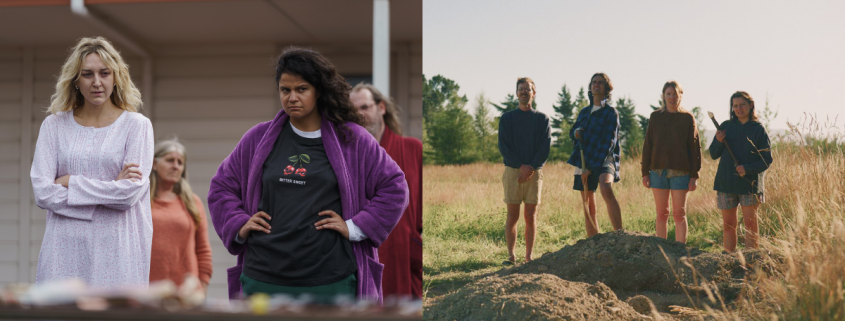
This week’s DEGANZ Watch List features stories packed with chaotic characters.

First up is the new drama series Crackhead, directed by Emmet Skilton (DEGANZ). You can watch the first four episodes on ThreeNow.

Ahead of its wider theatrical release, the trailer for fellow member Callum Devlin’s feature The Weed Eaters has just dropped. In the lead-up to its nationwide premiere on 30 April, the film’s creative team are hosting a series of Q&A screenings across Aotearoa. You can find screenings near you on Flicks.

Chaos ensues below…

Crackhead

Drama Series

Director: Emmet Skilton

Drug-addicted party-animal Frankie has blown it all up – her inheritance, her relationships, and most recently, her sister’s house. It’s time to go to rehab.


The Weed Eaters

Drama Feature

Director: Callum Devlin

When Jules joins her new boyfriend on a New Year’s Eve getaway with his old high school mates, she’s looking to get some peace and quiet, smoke a bit of weed, and make some new friends. But when the holidaymakers stumble across their host’s long-forgotten stash of ancient weed, things quickly take a turn for the nightmarish.


DEGANZ member Leanne Pooley‘s four-part docuseries Choir Games has been selected to screen at SeriesFest in May.

Often referred to as the ‘Sundance of TV’ with series like Yellowstone and Mr Robot launching there, SeriesFest is considered one of the top television festivals in the U.S.

This year, Choir Games is one of just eight unscripted programmes in competition. The festival describes the selected documentaries and limited series as projects that “bring real stories to life, celebrating the power of unscripted storytelling that informs, inspires, and captivates audiences.”

Leanne will be travelling to Denver, Colorado, for the festival.

If you still haven’t seen it, Choir Games is available on Neon and Sky Go in Aotearoa now.


View from the Top banner

I remember the first director’s training session for TV I attended now many years ago. Our workshop facilitator, John Harris, who went on to establish production company Greenstone, told us that one way to think of directing was like shopping: we had a shopping basket, and we had to fill it up for the editor with the right ingredients. A simple metaphor, but it worked for me at the time.

More importantly, I believe, it highlighted the importance of the editor to the creative process of crafting a story for the screen.

Editors too often are undervalued for the work they do. It’s not just about pushing buttons. It’s about utilising their creativity, knowledge and skill to elevate the material they’ve been given, which sometimes can be less than ideal.

An editor can save a director’s bacon, and often does, in factual and in narrative.

Like directing, editing is both an art and a craft. It’s one of the reasons that DEGANZ has established the Aotearoa New Zealand Screen Editor accreditation. To give the art and craft of editing its proper due when executed at a consistently high standard.

Unfortunately, editing and assistant editing can suffer from a lack of respect in the production process, especially when budgets are tight. This is unfortunate because it’s a false economy to seek to skimp in these areas and can ultimately mean budget and time are wasted, to the detriment of the project.

Another major area of concern for the Guild is the replacement of editors, particularly on feature films. Yes, failing relationships between director and editor can sometimes necessitate a change in direction. But the editor can sometimes bear the brunt of failure in other areas or because of external pressure exerted from distributors and sales agents on directors, producers and executive producers. Would a director or other HOD be replaced so easily? Of course not.

There are significant negative health and wellbeing outcomes that manifest for editors when they are replaced, particularly when it is handled poorly, as is often the case.

Equally concerning is the replacement or marginalisation of the assistant editor role. Working editors will all attest to the vital importance of this mahi and the detrimental effect on effective, efficient, quality post-production from losing assistants to ‘combo deal’ approaches from post houses, or the failure of producers to allow for, or enough time for, assistant editors to do the vital work they do.

DEGANZ also does not support the practice of multiple editors being contracted to work on a feature film. There can certainly be a need to bring in an outside editor consultant at times, to help the director and editor team look at the project with a fresh set of eyes. The hiring of multiple editors to execute a film, though, is a sausage-factory approach to the cinematic, artistic endeavour that does not recognise nor value the director-editor creative collaboration appropriately.

The DEGANZ board is now looking at how to best address these issues and is liaising with international editor bodies, examining best  practices, as well as engaging with local practitioners and entities to see what learnings and ideas we could utilise to effectively achieve outcomes that will benefit individuals and projects.

Editing is an art and craft that can make or break a project, and it deserves to be recognised for the crucial part it plays in the production process.


Tui Ruwhiu
Executive Director

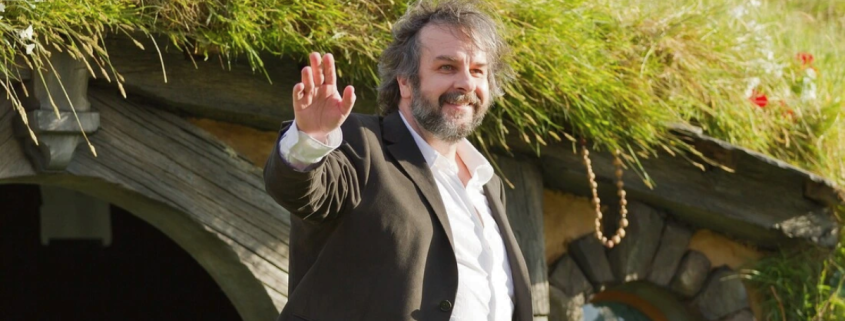
DEGANZ member Peter Jackson will receive the prestigious Honorary Palme d’Or at the opening ceremony of the 79th Cannes Film Festival in May 2026.

Introduced in 1997, the Honorary Palme d’Or is a lifetime achievement award presented to filmmakers who have made an outstanding contribution to world cinema. The award recognises an artist’s body of work rather than a single film and is typically granted to filmmakers with a significant career who have not previously won the festival’s top prize. Past recipients include contemporary screen icons such as Robert De Niro, Meryl Streep and George Lucas, alongside legendary filmmakers including Agnès Varda, Woody Allen and Bernardo Bertolucci.

The honour recognises Peter’s decades-long career and his impact on filmmaking, spanning cult classics, archival documentaries, and some of the most ambitious blockbuster productions ever made. Before making cinematic history with The Lord of the Rings film trilogy, Peter established himself with a string of acclaimed indie features, including Bad Taste, Braindead and Heavenly Creatures. His adaptation of Tolkien’s fantasy epic went on to become a global phenomenon, winning over fans’ hearts, 17 Academy Awards, and earning more than US$3 billion at the box office. Since then, Peter has contributed to Hollywood blockbuster franchises like King Kong, as well as exploring massive found-footage documentaries, including They Shall Not Grow Old and The Beatles: Get Back.

In announcing the honour, Cannes cited Peter’s ability to “blend Hollywood blockbusters and films d’auteur with extraordinary artistic vision and technological audacity.”

In the official Cannes press release, he shares,

To be honoured with an Honorary Palme d’Or at Cannes is one of the greatest privileges of my career. […] This festival has always celebrated bold, visionary cinema, and I’m incredibly grateful to the Festival de Cannes for being recognised among the filmmakers and the artists whose work continues to inspire me.


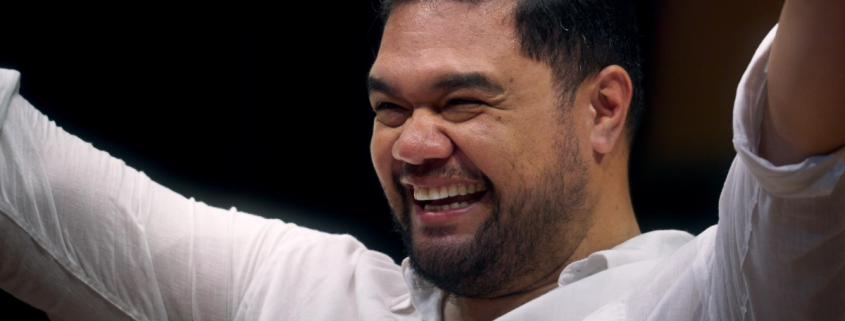
DEGANZ member Rebecca Tansley‘s documentary TENOR: My Name is Pati has had a smashing opening weekend, striking a chord with local audiences!

The feature follows the success story of renowned tenor opera singers Pene and Amitai Pati, who you may know as two-thirds of the popular musical trio, Sol3 Mio. Beginning in Samoa and moving to Aotearoa, the brothers came from humble origins before taking the opera world by storm. By weaving intimate family archival footage with behind-the-scenes observations and soaring performances, the documentary blends humour and heart to reveal the power of family, cultural pride, and determination when chasing dreams.

Rebecca has directed several arts-focused films before, covering the classic arts of ballet, orchestra, and, of course, opera. She has made two films for NZ Opera, including Semele in 2021, where she first filmed Amitai. Through the combination of her professional and personal interests in opera and the Pati brothers’ international success, she realised that the story deserved to be told on the big screen.

The documentary took three and a half years to make, taking the team around the globe and to some of the world’s most acclaimed opera houses. The film is not only a testament to the brothers’ amazing vocals but also to the production’s technical prowess. Recording opera singers is no easy feat, as each opera house has its own way of recording the singers’ performances, meaning lots of audio mixing in post-production.

TENOR’s first weekend in local cinemas placed it in the top four at the box office and secured the number one spot on 9 March, a huge feat for a feature documentary.

You can find a screening of TENOR: My Name is Pati in a theatre near you.