This news piece contains references to sexual abuse and violence. Please proceed with care.
DEGANZ member Chye-Ling Huang is seeking support on Boosted for her latest project, Beast Mode.
The short film was filmed in December 2024 with funding from NZFC and Script to Screen’s Kōpere Hou – Fresh Shorts programme. Now, the team are crowdfunding to finish post-production.
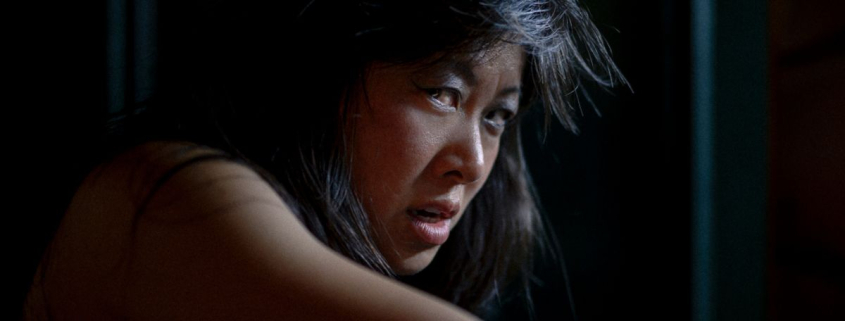
Beast Mode is a psychological drama, following a repressed sexual assault survivor, Sing (Nikita Tu-Bryant). On a drunken night out, she savagely attacks an innocent man (James Sexton), pushing her to face the energy of trauma that lives within her body.
The team hopes that this film will encourage more healing conversations within Asian communities, where sexual assault is not openly discussed due to the stigma surrounding sexuality and shame experienced by victims. They also hope that those who have experienced assault feel seen and heard in a non-traumatic way.
Writer/director Chye-Ling shares,
This is a story for those who know that the shades beyond that moment are deeper, weirder and much more confusing.
This film is also for those who want to understand more and I think we’ve done a pretty damn good job at capturing how it feels; a strange, satisfying, badass film with an imperfect heroine at the centre.
You can learn more about Beast Mode and support the team on their Boosted page.
This year marks the 12th annual Māoriland Film Festival (MFF), with many DEGANZ members’ mahi in the mix.
MFF is the world’s largest celebration of Indigenous storytelling with a wide range of of screenings, interactive installation and art exhibitions, industry events, and more. This year 130 films and digital works from 86 indigenous nations are screening across the five-day festival. It will run from March 26-30 2025 in Ōtaki on the Kapiti Coast.
‘Ko te mauri, he mea huna ki te Moana’ is a whakataukī that speaks of the life force of the ocean and the life force within us all. […] When we were programming this year’s festival, we watched stories that evidence these profound changes all over the planet told through an Indigenous lens. We also saw stories of resilience, ingenuity and courage informed by generations of knowledge. Indigenous communities have solutions and we hope visitors to Māoriland will leave this year’s festival activated and inspired.
Under the celestial guidance of Matariki, Maori elder Hamo and local delinquent Jo form an unlikely bond on a road trip. As they confront past traumas and each face their demons, their shared path becomes a journey of healing, community and reconciliation.
Grieving the loss of her daughter in the Christchurch earthquakes, Mareta reluctantly becomes a substitute teacher at an elite private school. There, she discovers students yearning for guidance and inspiration. Drawing on her cultural roots, she forms a choir and leads her students toward the prestigious Big Sing competition.
The last New Zealand War happened in 1979. It lasted three minutes. On May 1st, 1979, a group of young Maori and Pasifika activists, He Taua, confronted a gathering of University of Auckland engineering students as they rehearsed their ‘mock’ haka for their capping parade. The fracas that followed prompted the nation to confront systemic racism and instigate change for a better and more equal partnership between Pakeha and Maori.
Aotearoa, 1826. A dying man rides home along the coastline, while a Māori girl weaves a toy boat. She ventures through the forest to launch her boat and is led astray. Sensing danger, she hides and spies on the man and his horse. Fascinated by the horse, she approaches the man. Realising he may have infected her with his disease, he faces a dark dilemma: let her go and risk spreading the illness further or end it there.
Luka is a boy full of action and adventure, distinguished by his long, uncut hair—a proud symbol of his Niuean heritage. As his tenth birthday approaches, Luka prepares for the Hifi Ulu ceremony, a rite of passage that will mark his transition into young manhood. Navigating this milestone in his own unique way, Luka’s journey is quietly mirrored by his father’s unresolved feelings, having never experienced the ceremony himself. As the day draws near, anticipation builds, leaving everyone to wonder how Luka truly feels about this pivotal moment in his life.
Struggling with grief, Tia is plagued by mysterious earthquakes that seem to follow her. These unsettling tremors lead her to an otherworldly geothermal space, where she encounters a haunting spirit. The child-like figure is both terrifying and familiar, compelling Tia to confront her deepest fears. As she learns to communicate with the spirit through the geothermal waters, a profound and unexpected connection is revealed. In this emotionally charged moment, Tia comes to terms with her past, allowing both herself and the spirit to find peace.
Far from their islands in Te Moana-nui-o-Kiva – the South Pacific Ocean – three sisters are raised by their father in a small village in Aotearoa. Rei, Ina and Matilda G share a love of basketball. The sudden death of the eldest sister takes the younger two to Havaiki Nui – the Underworld – where they’re forced to play ball to return home. Opens Looks is a short film told in English and Cook Islands Maori. This is a story of love, grief and basketball.
When a welfare department’s insidious prejudice can no longer be tolerated, a group of unlikely heroes band together against a narrow-minded caseworker. Made in collaboration with Toi Whakaari, Mia Blake cleverly reflects the state of the nation in this punchy black comedy.
Our marine environment is facing enormous pressure from human activities such as excess sediment, nutrients, and plastic pollution, along with impacts at sea from commercial and recreational fishing, aquaculture, extraction of natural resources, introduction of non-indigenous species, and coastal development. These cumulative stressors are being made worse by a changing climate, leading to increased ocean acidification, sea-level rise, and sea-surface temperatures. In Turning The Tide: Mātauranga-led Restoration, Kura Paul-Burke of the University of Waikato is working with doctoral and undergraduate students to research and restore mussel beds in a Mātauranga-led approach.
https://www.deganz.co.nz/wp-content/uploads/2025/02/Maoriland-25.jpg4561200admin/wp-content/uploads/2021/10/DEGANZ_logo_home.pngadmin2025-02-13 11:21:152025-02-13 11:21:15DEGANZ Members in the Māoriland Mix
Kōkā, edited by DEGANZ board member Te Rurehe Paki, is making history as the first feature film shot in the original dialect of Ngāti Porou and is coming to cinemas in June 2025.
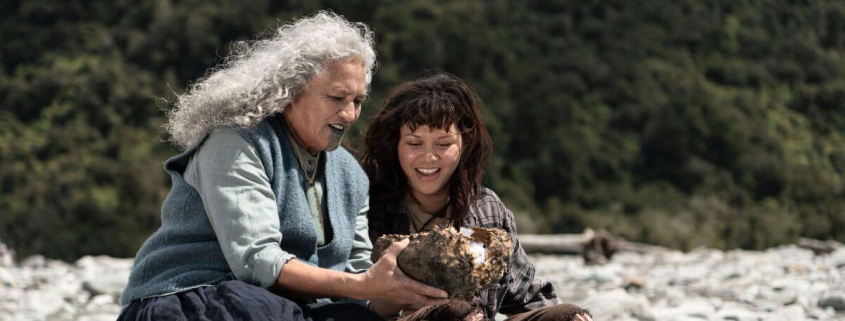
The film is a powerful relationship drama following Māori elder Hamo and troubled teen Jo who form an unlikely bond on a road trip in a Ford Falcon. Together they confront past traumas and each face their demons. Their shared path becomes a journey of healing, community, and reconciliation.
Writer/director Kath Akuhata-Brown (Ngāti Porou) speaks on the film’s inspiration saying,
I wanted to make a film that puts a Māori world view front and centre of the screen. It’s a road trip about an elder who feels it’s time to go home, but getting home isn’t going to be easy for her.
She invites audiences to experience Kōkā as a “journey of dignity, heart and of mana in the face of a landscape that is constantly shifting.”
Check out the trailer below and keep an eye out for Kōkā in cinemas this June.
It’s been hard to keep up with all the new work from DEGANZ members coming out! For factual series lovers, here are series by members to check out across various platforms.
From looking into the past, to analysing the present, to thinking about how we can learn and progress for the future, these shows tackle social issues pertinent to Aotearoa.
In 1937, Japan invades China. The Japanese sweep south to Guangdong, capturing the strategic port of Guangzhou. Many women and children try to escape war-torn China. Their husbands in New Zealand beg the government to grant them sanctuary here. These are some of the harrowing stories of our grandmothers and mothers, the pioneers of our community.
Based on Lily Lee’s publication Farewell Guangdong, the show uses dramatic re-enactments, interviews, and historical archive material to bring to life first-hand accounts from the wives and children who fled Guangdong, China during the second Sino-Japanese War from 1937 to 1945.
No matter where we come from, how we identify ourselves or what we’re into, the desire to find connection is universal. Over the next six months, a diverse group of young New Zealanders will take part in a dating conversation via a new social media project, d8talk. Simply put d8talk is people talking about dating.
Unravelling the lasting echoes of the 1970s Dawn Raids: the extraordinary stories of what happened, why it matters and how young generations are using the lessons of the past as ways to deal with our future.
Join Eli Matthewson for a journey through the untold history of New Zealand’s queer community, celebrating the resilience of trailblazers who pushed for an inclusive Aotearoa.
https://www.deganz.co.nz/wp-content/uploads/2025/02/DEGANZ-Watchlist-Factual-Lovers.jpg4561200admin/wp-content/uploads/2021/10/DEGANZ_logo_home.pngadmin2025-02-13 11:17:482025-04-09 15:14:37DEGANZ Watch List: One for the Factual Lovers
While the awards tend to focus on films with wide releases in America, this category recognises a slate of ten international films as the best releases outside the U.S. in 2024. Others on the list include Acting by Sophie Fiennes, Berlinale Silver Bear winner Dying, and Kiyoshi Kurosawa’s Cloud. Amongst the award winners are Hollywood heavyweights Anora and The Substance.
This is the third international nod for The Moon is Upside Down which won Best First Feature at the A-list festival Tallinn Black Nights and the Special Jury Award at the Santa Fe International Film Festival.
If you missed the film in theatres last year, you can stream it on Aro Vision.
https://www.deganz.co.nz/wp-content/uploads/2025/02/Moon.jpg4561200admin/wp-content/uploads/2021/10/DEGANZ_logo_home.pngadmin2025-02-13 11:17:182025-02-13 11:17:18‘The Moon is Upside Down’ Named One of the Online Film Critics Society’s Best Non-U.S. Releases of 2024