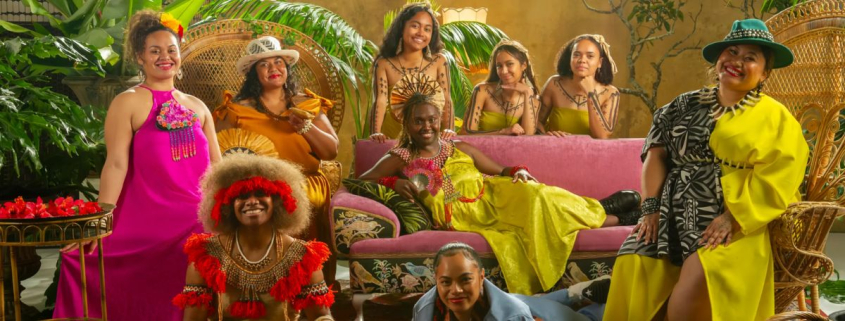
Myths & Maidens, edited by DEGANZ member Cushla Dillon, won the Best Current Affairs (long) or Documentary category at the 2025 Voyager Media Awards.

The annual awards ceremony encourages, showcases, and acknowledges the best of Atearoa’s news media across all platforms. Since 1973, the awards have recognised the work of journalists, reporters, feature writers, columnists, cartoonists, reviewers, photographers, and video journalists.

Myths & Maidens is a self-proclaimed love letter to Moana women. It delves into collective trauma, challenges, and inequities faced by women across Pasifika. By sharing women’s stories, the Coconet TV documentary tackles issues of colourism, fat-phobia, and how our societies have been taught to view women of colour across the ages. Yet in the face of all this, Myths & Maidens highlights how Pasifika women’s resilience and celebration of themselves is an act of colonial resistance.

The judges commented on the doco saying,

‘Myths & Maidens’ is a wildly original and thought-provoking documentary about female identity in Pasifika society. The producers used creative devices and structured the story in a clever way to make the subject matter compelling. With the western gaze of artists like Paul Gauguin and the historical representation of indigenous societies now facing closer scrutiny, this documentary is an important addition to that very important cultural reckoning.

Congratulations, Cushla and the entire Myths & Maidens team, on the win!


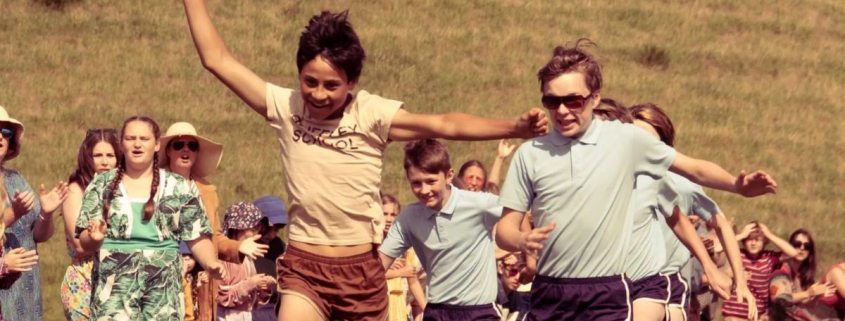
April Phillips (DEGANZ) is crowdfunding to finish post-production on 1978, a feature film she co-wrote and is co-directing.

Set in 1978, the film follows the lives of a rural Māori-Pākehā family fighting on two fronts: the loss of ancestral land and the closure of their small country school. Inspired by one of the team’s childhood, 1978 shines a light on the strength of community and identity in the face of change.

So far, the team has self-funded the film over the past three years. It is now 80% complete but needs a final push to make it over the finish line. All funds raised from the Boosted campaign will go towards visual effects, colour grading, and the final delivery costs.

You can find out more about the project and support it on the Boosted page.

All the best to the team on the crowdfunding, and we look forward to seeing 1978 once it’s finished!


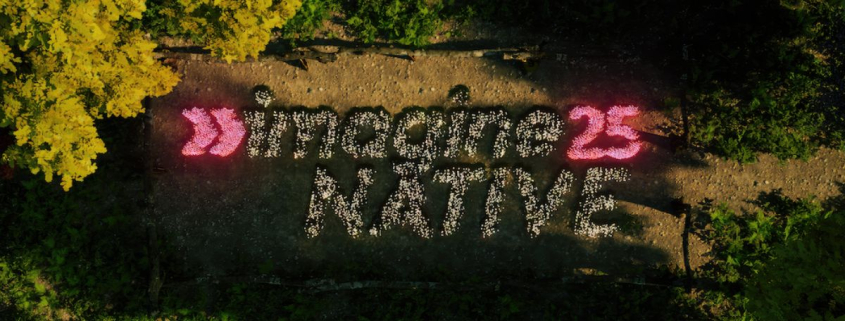
Seven DEGANZ members’ mahi is being showcased in this year’s programme of imagineNATIVE Film + Media Arts Festival, the world’s largest exhibition for film, video, audio, and digital, and interactive media made by Indigenous creators.

Starting in 2000, this year marks imagineNATIVE’s 25th run with 55 Indigenous nations from 16 countries included in the line up. The theme this year is seed keeping and the passing down of seeds to the next generation. The festival reflects on the theme saying,

Like ancestors planting their seeds to grow and harvest sustenance for the people, we look back on 25 years of Indigenous artists breaking barriers, opening doors for each other, connecting, collaborating, and inspiring fearlessness in storytelling for future generations.

imagineNATIVE will run 3-8 June in Toronto and 9-25 June online. Congratulations to all those selected!

Features

Kōka

Editor: Te Rurehe Paki

Worlds collide when Māori Elder Hamo accidentally hits Jo, a rough-around-the-edges wahine, with her car. Feeling responsible for her care, Hamo tries to help Jo back on her feet, only to find herself entangled in Jo’s antics after Jo lost her only home and family — a group of misfits who outlived their stay in an encampment. Hamo reluctantly agrees to take Jo under her wing, bringing her along on the trip back home. While on the road, the women form an unlikely bond that leads them to face the past and lean on each other on the path to healing.

The Haka Part Incident

Writer, Director & Producer: Katie Wolfe

This impressively candid documentary revisits the three-minute-long “incident” at the University of Auckland, which triggered race relations between Māori and non-Māori in 1970s New Zealand. Current Interviews with the engineering students who participated in the mocking haka party and members of the activist group that disrupted it, now adults, reflect on their versions of what happened. Directed by Katie Wolfe (one of the directors of 2017’s Waru) this doc, originally a theatre piece, is the ultimate telling of this true story. With archival footage and insights from those who were there, The Haka Party Incident brings forgotten history to life.

Ka Whawhai Tonu – Struggle Without End

Editors: Te Rurehe Paki & Martin Brinkler

Writer: Tim Worrall

It’s 1864 and against impossible odds, the Māori in the Waikato region valiantly face an army of colonial settlers to fight for their lands and people. Haki is a half-Māori and half-European teenager fighting on the side of the New Zealand military and taken prisoner by the Māori resistance. He befriends Kopu, a Māori girl who is imprisoned in her own right as she is believed to be the vessel for manifesting a Māori god of war, used for guidance as a resistance tactic in her people’s battle for sovereignty. Haki and Kopu find themselves caught between many concurrent battles of identity politics, physical and spiritual warfare, and friends and enemies, as they both discover there is no escape without a fight.

Short Film Programme: Knee Slappers

Honey Kaha

Writer, Director & Co-Editor: Te Waiarangi Ratana

The low-budget adventures of streetwise fisheries officer Honey Kaha are brought to life by star Dr. Julia Love and her dastardly former husband, Kent Barry.

Chatterbox

Editor: Amarbir Singh

A woman struggles with her relationship with her body. It’s not that she hates it, she just wishes her vagina would stop calling her a bitch.

Short Film Programme: Elder Stories

Rapido

Co-Writer, Director & Co-Editor: Richard J Curtis 

A young Māori boy’s fascination with war comics comes closer to home than he could ever imagine.


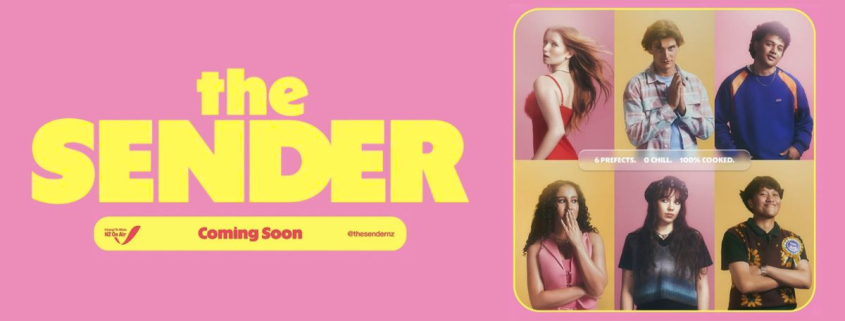
The Sender, directed by Liv McClymont (DEGANZ) and edited by fellow member Ben Chesters, is out now on Instagram and TikTok.

The NZ On Air funded web series was created by Liv and producer Jessica Todd to meet young audiences where they are. Shot in a vertical aspect ratio and edited to suit the short form platforms, the series is not only made for social media, it is all about social media.

When six school prefects sneak away to a remote bach for a night of underage drinking and questionable decisions, they expect a chill evening—not total social annihilation. At 10 P.M. their phones light up with messages from @thesender, an anonymous account sending scandalous photos that could destroy their carefully crafted lives.

While filled with classic teen drama hijinks, The Sender also tackles the serious topics of image-based abuse and sextortion. It approaches this serious subject matter with humour and authenticity, making the difficult conversation more accessible to younger audiences.

The first five episodes are out now, with new episodes dropping four times a week.

Congrats to Liv, Ben, and the entire The Sender team!


Three feature films from DEGANZ members have been selected for this year’s Sydney Film Festival (SFF). SFF is celebrating its 72nd year with more than 240 films from 70 countries in the programme. The selected films cover themes of resistance, rebellion, identity, climate change, and cultural struggle.

The highly anticipated Pike River, directed by Robert Sarkies (DEGANZ) and edited by Peter Roberts (DEGANZ), is celebrating its world premiere in the Special Presentation strand. This is SFF’s big night out at the renowned State Theatre featuring films with big stars, special guests, and red carpet events.

Documentaries Marlon Williams: Ngā Ao E Rua – Two Worlds, edited by Josh Yong (DEGANZ), and The Haka Party Incident, directed by Katie Wolfe (DEGANZ), are screening in the First Nations Awards strand. The programme is the world’s largest cash prize in global Indigenous filmmaking. The selected films are full of rich images, ideas, and perspectives from Indigenous storytellings from Canada, Aotearoa, Indonesia, Norway, and Australia.

Congratulations to Katie, Josh, Robert, and Peter on the prestigious selection!

Pike River

Director: Robert Sarkies

Editor: Peter Roberts

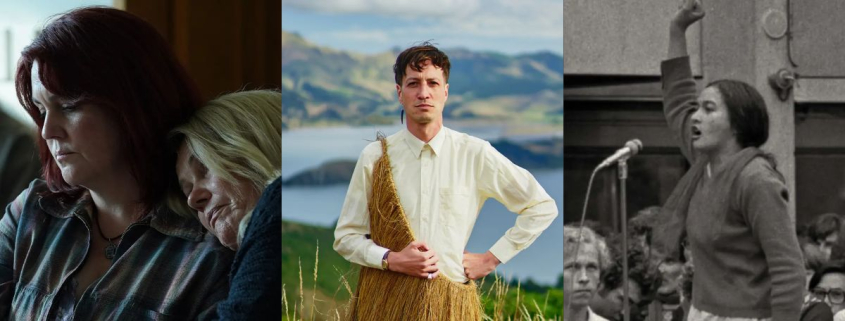
The powerful true story of Anna Osborne (Melanie Lynskey) and Sonya Rockhouse (Robyn Malcolm), and their fight for justice following New Zealand’s deadliest modern mining disaster.

In 2010, a massive explosion trapped 29 men inside the Pike River coal mine in the remote West Coast of New Zealand. This deeply moving film portrays the friendship that grew between Anna, who lost her husband Milt, and Sonya, who lost her youngest son, Ben. Drawing strength from the other, they rebuild their shattered lives and gradually discover the scale of the betrayal they’ve endured. Together they find the courage to fight back against the mining bosses, the judiciary and the government. Their joint efforts shake the nation. Capturing their heroism with great sensitivity, Pike River is an inspiring account of the power of friendship.

Marlon Williams: Ngā Ao E Rua – Two Worlds

Editor: Josh Yong

Follow the charming Aotearoa New Zealand singer-songwriter on a life-changing journey of self-exploration as he embraces his roots and creates his first album in te reo Māori.

Beloved for his alt-bluegrass stylings, Christchurch-born Marlon Williams has spent years on the road, touring with the likes of Florence + The Machine and Bruce Springsteen, and even making a fan of Bradley Cooper, who handpicked the musician to appear in A Star Is Born. This sensitive documentary finds Williams at a crossroads: he returns home to reconnect with his Ngai Tahu and Ngai Tai roots, and to write an album entirely in te reo Maori – calling upon his friend Lorde to contribute. Director Ursula Grace Williams crafts a loving portrait of an artist at his peak. Set against stunning Aotearoa New Zealand landscapes, her film celebrates the creativity that flows from exploring one’s own heritage and identity.

The Haka Party Incident

Writer, Director & Producer: Katie Wolfe

A three-minute protest staged in 1979 echoes across the decades as a potent indictment of systemic racism and a lens through which to re-examine Aotearoa’s national identity.

On May 1, 1979, the Maori and Pasifika activist group He Taua confronted University of Auckland engineering students over their annual “haka party”– a racist and drunken mock haka – in what became a pivotal moment in Aotearoa’s race relations. Katie Wolfe’s stirring documentary revisits the event through archival footage and unfiltered contemporary interviews. Adapted from the director’s acclaimed play, the film is suffused with tension, legacy, and painful introspection. With powerful juxtapositions of the past and the present, it interrogates what has changed and what hasn’t – and what remembrance really means. A vital documentary that reclaims forgotten history and honours those who stood up, and changed a nation.